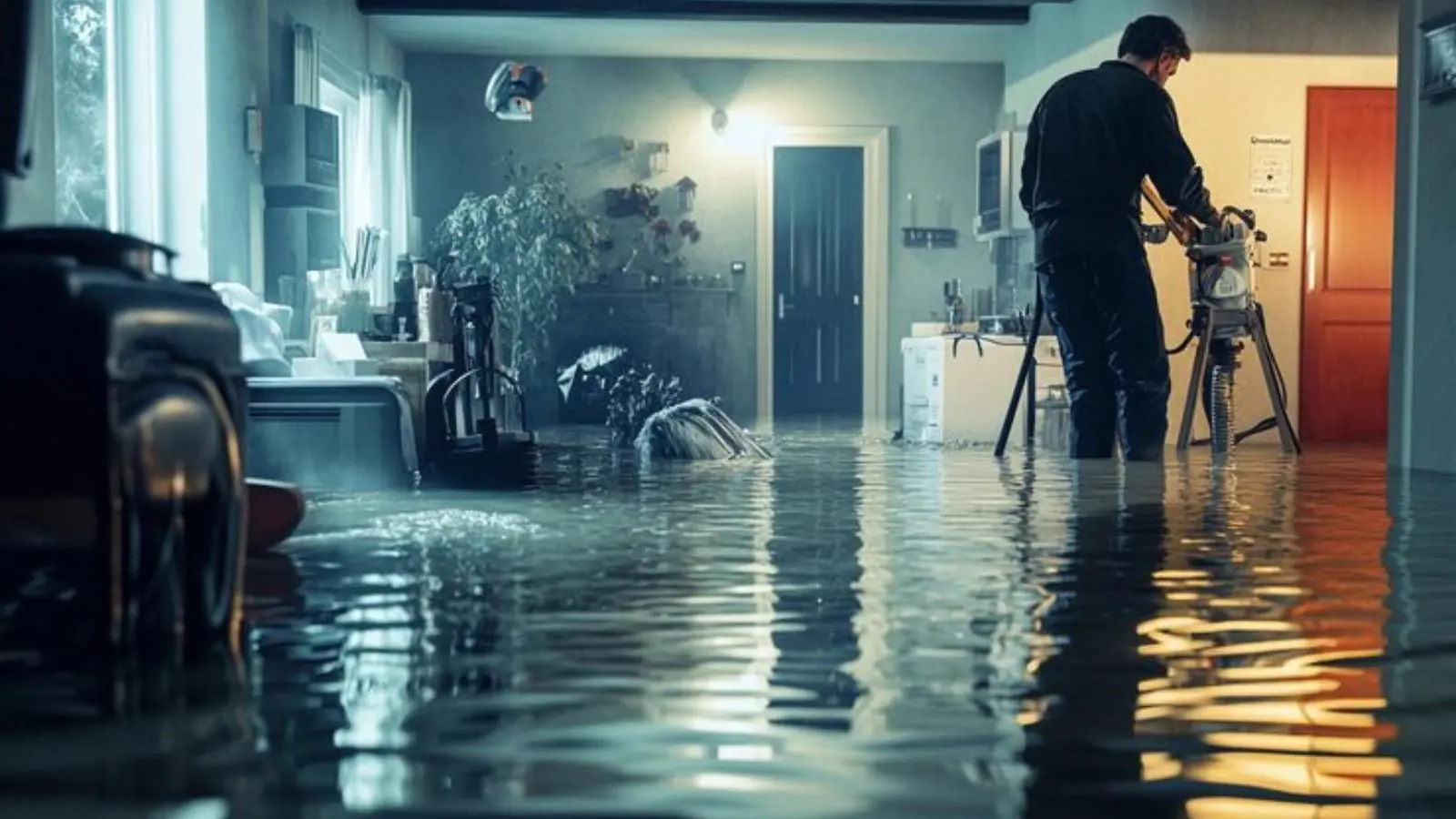
If water is still coming in, this is an emergency, and the 24/7 line is open right now. While you call, shut off the main water valve if the source is a supply line, turn off the leaking appliance, and lift anything valuable off wet floors. If water has reached outlets or the electrical panel, stay out and call the utility or 911 before you call us.
Water mitigation in College Park is the work of limiting damage in the first 24 to 72 hours. It means finding where the moisture went, removing standing water, and drying the structure before materials rot or mold takes hold. Repairs come later, once the building is dry.
Wet Wall, Soaked Carpet or a Musty Smell? That Is a Mitigation Job
Most people do not search for mitigation. They search for a wet wall, a soaked carpet or a smell that will not go away. All of these point to the same job, which is finding hidden moisture and drying it out. Water mitigation is the trade name for exactly that work.
When Standing Water Becomes an Emergency
Water that sits for a day starts to soak into drywall, subfloor and framing, and the EPA advises drying water-damaged materials within 24 to 48 hours to prevent mold growth. Any of these makes it urgent: water still flowing, water touching electrical equipment, water on more than one floor, or water that may contain sewage.
Safety before anything else
Water and electricity do not mix. Cut power at the panel only if the panel is dry and you can reach it without stepping in water. If you cannot, stay out and call the electric utility or 911.
If you smell gas, leave the building and call 911 from outside. If the water may include sewage, keep people and pets away and do not try to clean it yourself.
The First 24 to 72 Hours, Stage by Stage
| Stage | What happens | Why it matters |
|---|---|---|
| Stop the source | Valve closed, appliance off, roof or line leak contained | Nothing dries while water keeps arriving |
| Map the moisture | Moisture meters and thermal imaging find wet walls, floors and ceilings | Hidden water is the usual cause of repeat damage |
| Extract | Pumps and extraction units remove standing water and soak from carpet and pad | Removes the bulk of the water quickly |
| Set up drying | Air movers and LGR dehumidifiers placed to a drying plan | Moves moisture out of the structure and out of the air |
| Monitor | Daily readings until materials reach a dry standard | Equipment stays until the numbers say it can leave |
A technician adjusts the plan to the building. These stages are the usual order.
Structural Drying: How a Wet Building Is Dried
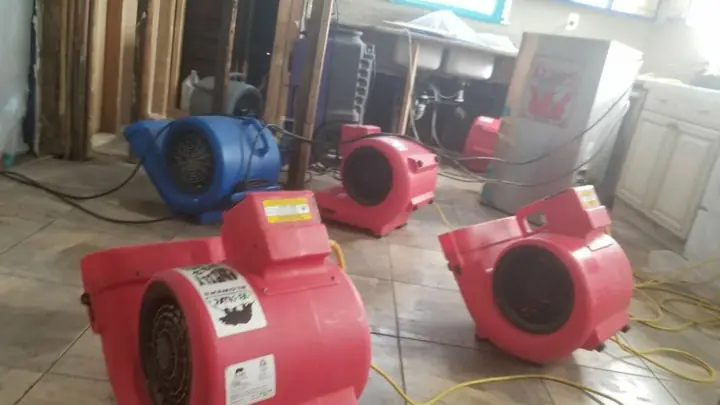
Structural drying is the part most people have never seen. Air movers push moving air across wet surfaces, and low-grain-refrigerant dehumidifiers pull moisture out of that air so it can absorb more. Without the dehumidifiers, the room only gets damper. Without the air movers, the water in walls and floors stays put.
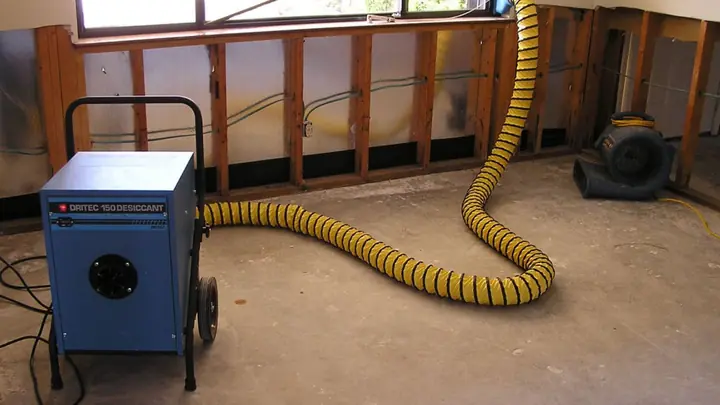
Technicians take readings at set points each visit and chart them. Drying is finished when materials return to the dry reading for that material, not after a fixed number of days. Industry practice for this work is published in the ANSI/IICRC S500 standard, and it is fair to ask any company whether its crews work to it. Wet carpet pad, saturated insulation and soaked baseboards are often removed early to speed the whole job.
Water Categories and Why They Change the Plan
| Category | Typical source | What it means for the job |
|---|---|---|
| Category 1 | Broken supply line, overflowing sink, clean rainwater | Often dried in place if addressed quickly |
| Category 2 | Washing machine or dishwasher discharge, sump pump failure | More cleaning and some materials removed |
| Category 3 | Sewage, rising creek or flood water, long-standing water | Protective equipment, removal of porous materials, sanitizing |
Category definitions come from the published S500 standard. Water that sits can move up a category.
Mitigation in College Park Homes and Buildings
Calvert Hills had a storm on September 10, 2020 that sent stormwater into houses and, in some cases, sewage back through drains, according to City Council minutes from January 11, 2021. In situations like that, the water category matters from the first minute. Sewage-contaminated water means removal of porous materials and sanitizing, not just drying.
Plaster walls in older Old Town houses dry slowly because plaster holds moisture, so a crew expects extra monitoring there. Student rental units near campus often need fast extraction when an upstairs appliance fails and water runs into the unit below. If your building has a landlord or property manager, tell them in writing and keep your photos.
Water in the structure right now? The 24/7 line is the fastest way to get a drying plan started.
☎ Call (301) 936-0619What Drives the Cost of Water Mitigation
The cost depends on the water category, how much floor and wall area is wet, how many days the equipment runs, and which materials have to come out. A small clean-water leak caught the same day is a small job. A sewage backup in a finished basement is a large one. No fair price can be quoted without a site visit, so scope and price are explained before work starts.
For insurance, check your policy and ask your insurer. Sudden and accidental water damage is often covered. We document with photos, moisture readings and notes. For larger damage, see emergency water removal for the extraction stage, water damage cleanup for removing soaked materials, and Greenbelt if the loss is in that town.
Water Mitigation Questions
Yes. The line is answered 24 hours a day, including nights, weekends and holidays. Call (301) 936-0619 and describe the water. Same-day response is offered when available, and no arrival time is promised over the phone.
Mitigation limits the damage in the first 24 to 72 hours by stopping the source, extracting water and drying. Restoration is the full path, including cleaning and rebuilding. Mitigation comes first, and speed helps because wet materials get worse each day.
It depends on the materials, the amount of water and the weather. Technicians chart moisture readings each visit, and drying is finished when materials reach their dry standard, not on a fixed date.
Rental equipment is not offered through this site. Drying works best when equipment is sized and placed to a plan and monitored with readings, so ask a technician what your building needs.
Waiting is risky. The EPA advises drying water-damaged materials within 24 to 48 hours to prevent mold growth, and hidden moisture behind walls does not dry on its own.