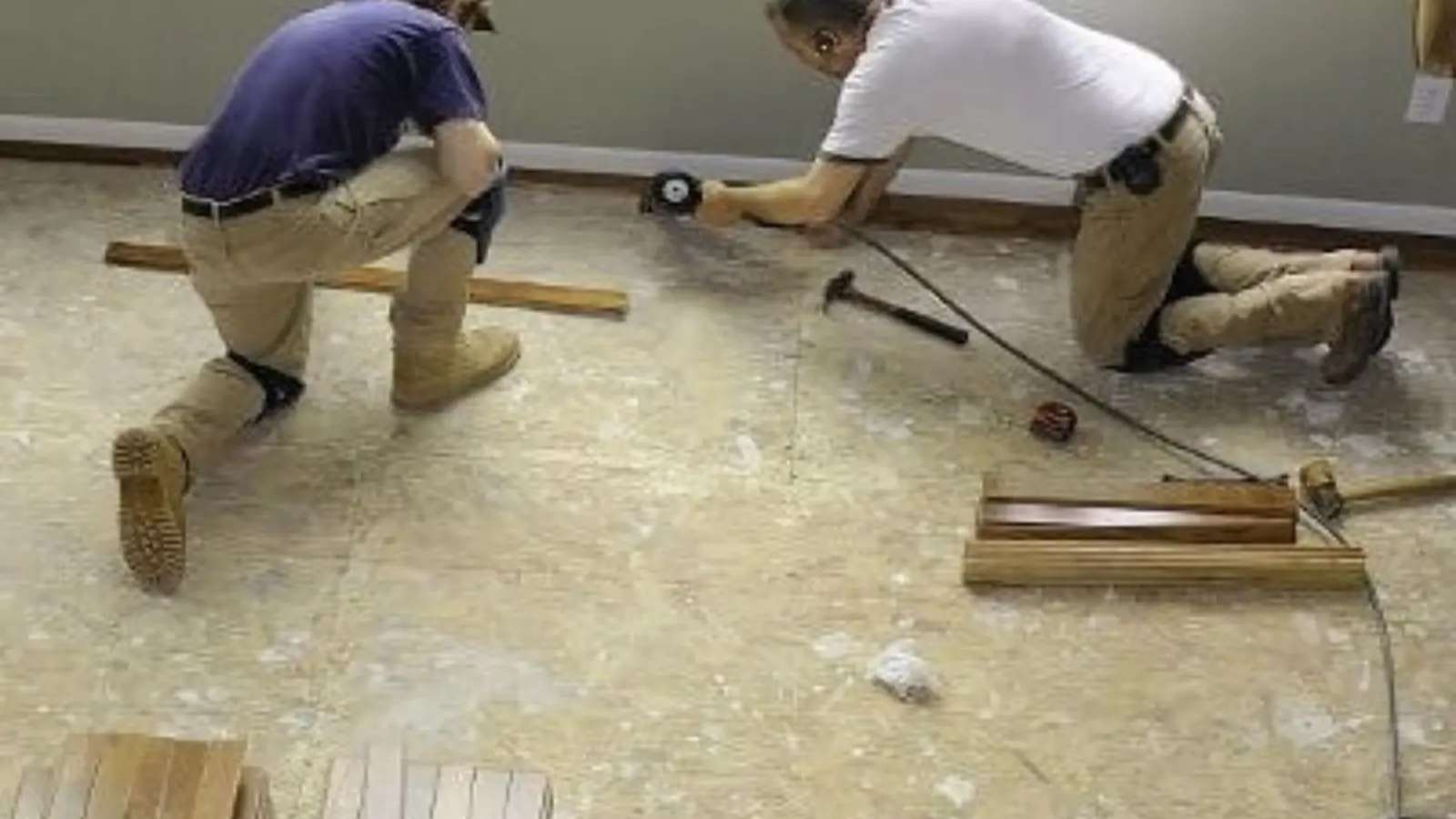
Water damage repair in College Park is the rebuild stage that follows drying. It covers replacing wet drywall and insulation, patching or replacing ceilings, repairing or replacing flooring, and repainting so the room looks the way it did before the leak. If your walls or floors are still wet, start with water mitigation, because repair work over a damp structure fails.
Repair is the stage people tend to notice first, since a stained ceiling or a soft patch of drywall is what shows. This page explains what repair involves, how to tell what can be saved, and what drives the scope. For anything still actively leaking, call the 24/7 line and we will talk through the first steps.
Repair Starts Only After the Structure Is Dry
Closing a wall over damp framing traps moisture, and trapped moisture grows mold. The EPA advises drying water-damaged areas and items within 24 to 48 hours to prevent mold growth, and keeping indoor humidity below 60 percent, ideally between 30 and 50 percent. Repair crews work to that same logic. They confirm dryness with a moisture meter before any new material goes up.
That is why a quick patch over a stain is rarely the right first move. A ceiling stain tells you water reached the drywall. It does not tell you whether the insulation above it is still wet or whether a pipe is still weeping. Finding the source and confirming a dry reading come first, and then the rebuild is planned around what was actually damaged.
Signs Water Damage Needs Repair, Not Just Drying
- Drywall that feels soft, crumbles at the edge or has swelled at the seams.
- A ceiling that sags, bubbles or shows brown rings that return after painting.
- Floorboards that cup, crown or lift away from the subfloor.
- Baseboards and trim that have swollen or separated from the wall.
- Paint that blisters or peels in patches, or a musty smell that stays after the wall feels dry.
Any one of these can be the only visible sign. If you see two or more together, plan on opening the wall or ceiling to look, because the visible damage is usually the smaller part of the wet area.
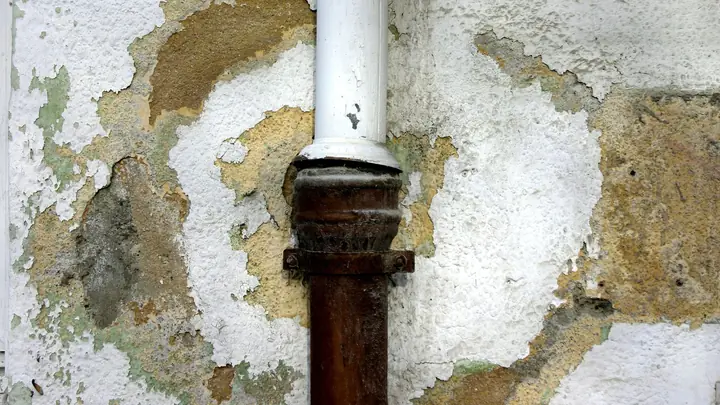
Ceiling and Wall Water Damage Repair
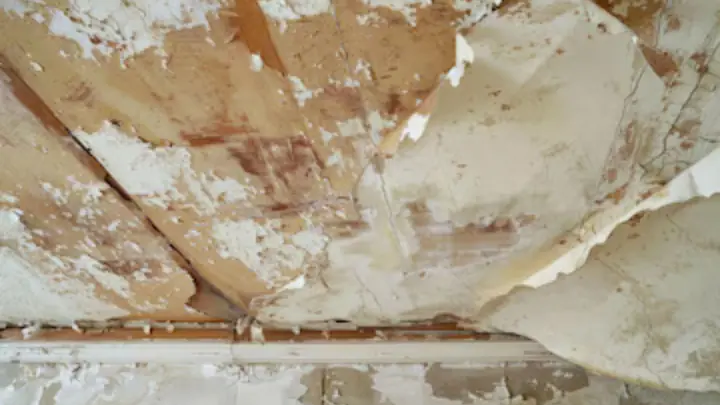
Ceiling and wall repair is the most common job we see, and it follows a clear order. First the source is stopped and the wet area is dried and measured. Then the damaged drywall is cut back to a clean edge, usually a few inches past the last wet reading, and any wet insulation behind it is removed.
New drywall is hung, taped and finished, and the patch is primed with a stain-blocking primer before paint. Textured ceilings take extra care, since the texture has to be matched so the patch does not show in raking light. Plaster and lath ceilings in older houses are handled differently, because plaster can often be reattached or skim-coated instead of torn out.
A collapsed or heavily sagging ceiling is a safety matter. Keep out from under it and do not poke or drill into it, since the water above can come down at once and may sit near wiring. Call for help before anything is pulled down.
Not sure whether your ceiling or wall can be saved? Describe it on the phone and we will tell you what to look for.
☎ Call (301) 936-0619Hardwood Floors: Cupping, Crowning and What Can Be Saved
Wood absorbs water and swells. When the underside of a board stays wetter than the top, the edges rise and the board cups. If the floor is sanded before it finishes drying, the surface can flatten and later crown. For that reason a hardwood floor that cups after a leak is dried slowly and checked for several days before anyone talks about sanding.
Some floors dry back close to flat and need only refinishing. Others, especially boards over a wet subfloor for many days, have to be replaced in sections. A moisture meter reading against the same species of dry wood is the honest test, not how the floor looks on day one.
Repair or Replace: A Quick Decision Framework
| Material | Often repaired | Usually replaced |
|---|---|---|
| Painted drywall | Small stain, dry and firm | Soft, crumbling or wet for more than a day or two |
| Ceiling drywall | Dry stain with no sag | Sagging, bubbled or wet insulation above |
| Plaster and lath | Dry and solid, reattach or skim | Crumbling plaster or loose keys |
| Hardwood floor | Mild cupping that flattens as it dries | Heavily cupped boards over a wet subfloor |
| Carpet and pad | Clean water, dried quickly | Contaminated water or long soak |
| Insulation | Rarely saved once wet | Fiberglass or cellulose that stayed damp |
This is a general guide. A moisture reading on site decides each case.
Older College Park Homes: Plaster, Lath and Historic Districts
Old Town and Calvert Hills are among College Park's oldest neighborhoods, and many older houses there have plaster walls and ceilings that behave differently from drywall. Old Town is also a historic district, and the City says residents there must follow the district's Design Guidelines for work on a home or lot. Before an exterior repair, ask the City's Planning and Community Development department what applies.
More broadly, the City says that in most cases home work needs a permit, and Prince George's County issues its own permits through its Department of Permitting, Inspections and Enforcement. Ask before you start. Permit rules vary by project, so we do not guess at them.
What Drives the Cost of Water Damage Repair
Four factors move the price. The first is how much was removed, since a patch the size of a dinner plate and a full ceiling are very different jobs. The second is the material, because plaster, hardwood and textured ceilings take more labor than plain drywall. The third is finish matching, including paint, texture and trim. The fourth is access, such as a second-floor ceiling or a tight crawl space.
Scope and price are explained before work starts. We do not publish dollar figures, because a number without a site visit is a guess. For insurance, the general rule is to check your policy. Sudden and accidental damage is often covered, while gradual leaks and neglect often are not, and your insurer decides coverage.
Mold sometimes shows up when a wall is opened. If so, the job pauses and mold remediation takes over before any new drywall goes up. Water that came from a flooded basement or sewage backup follows a different cleanup path, covered under flood damage restoration, and the same crews serve Hyattsville to the southwest.
Common Questions
No. Repair starts after drying and a confirming moisture reading. New drywall or flooring over a damp structure traps moisture and invites mold. A technician takes readings and decides when the structure is ready.
A dry, firm stain that does not grow can sometimes be primed and painted. A ceiling that sags, bubbles, feels soft or shows a stain that returns needs the drywall opened up, because wet insulation or a leak source is likely above it.
Maybe. Sudden and accidental damage is often covered, while gradual leaks and neglect often are not. The Maryland Insurance Administration also notes that policies generally do not pay to repair the pipe itself. Check your policy and ask your insurer.
Sometimes. Floors that were dried slowly and checked with a moisture meter often flatten and need only refinishing. Boards that sat over a wet subfloor for days may need replacing in sections.
Yes. The same crews serve those towns. See Greenbelt and Beltsville for local detail.