Water problems come in stages, and each stage has its own trade name. Knowing which stage you are in helps you ask for the right help, and it helps you understand a scope of work when someone explains it. The six services below are listed in the order most people need them, and each has its own page with more detail.
Which Service Matches Your Situation?
| What you see | The service | What it does |
|---|---|---|
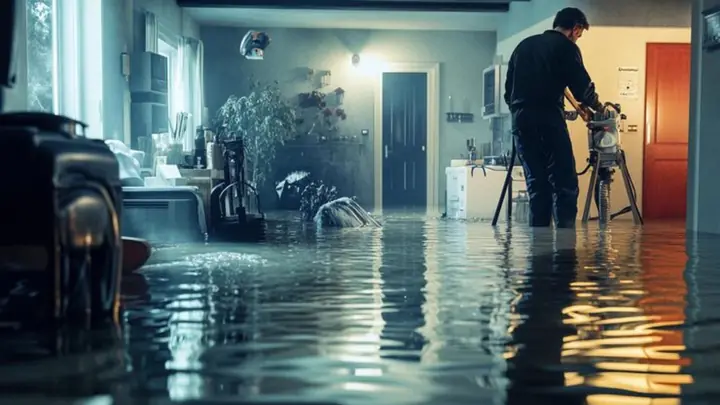
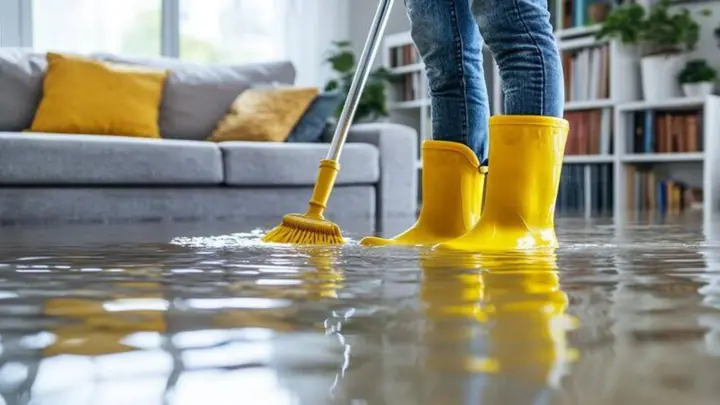
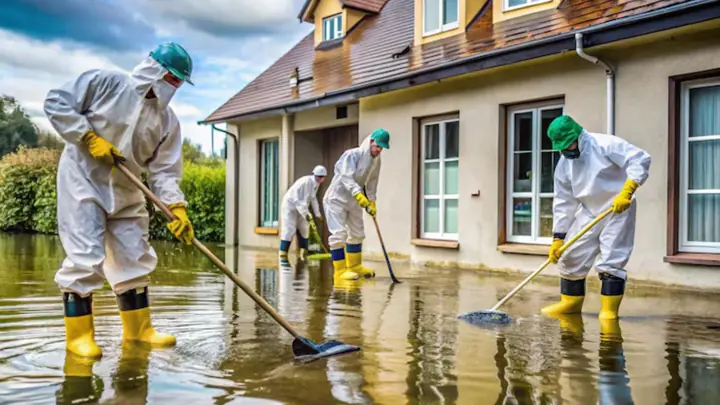
| Water on the floor right now | Emergency water removal | Pumps and extraction units pull standing water out |
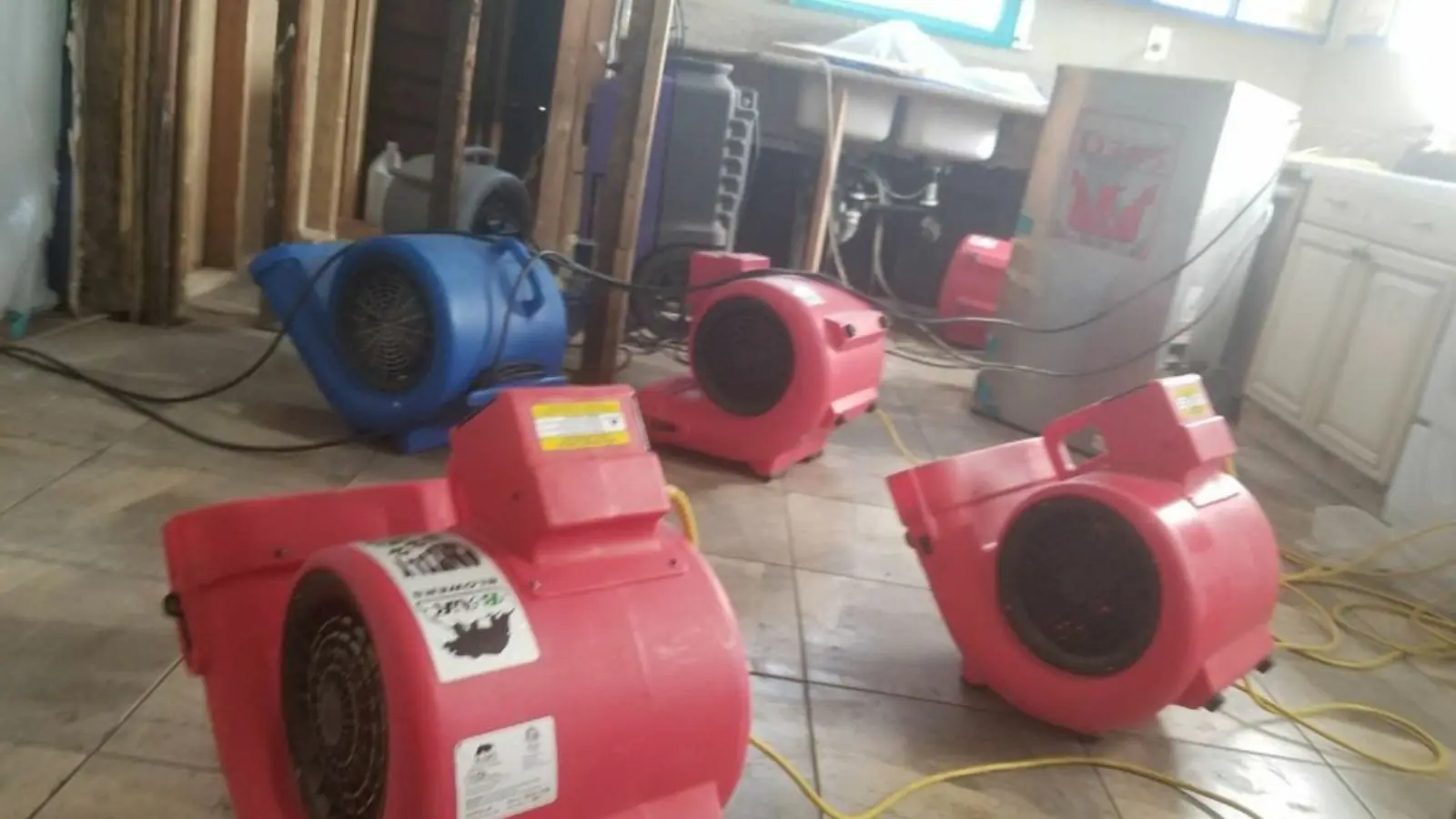
| Wet walls or carpet, no standing water | Water mitigation | Moisture mapping, extraction and structural drying |
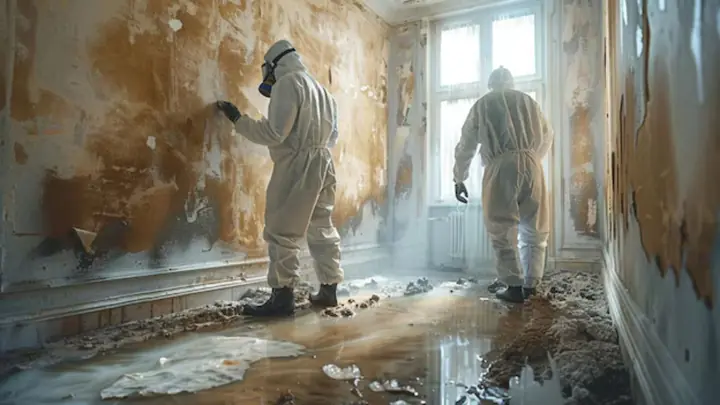
| Soaked materials and a sour smell | Water damage cleanup | Removes wet materials, sanitizes and deodorizes |
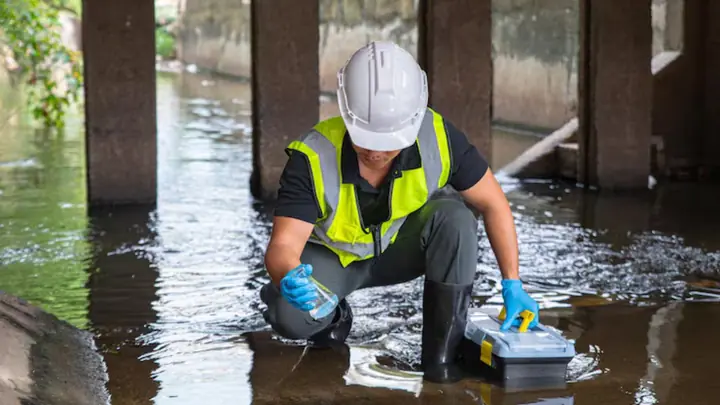
| Basement or sewer water after a storm | Flood damage restoration | Handles contaminated flood and sewage water |
| Stained ceiling, soft drywall, cupped floor | Water damage repair | Rebuilds drywall, ceilings, floors and paint after drying |
| Musty smell or dark spots after a leak | Mold remediation | Contains and removes mold once moisture is fixed |
Several services often overlap on one job. A technician explains which apply.
How the Services Fit Together
Most jobs run in one order. The first step is stopping the source and removing standing water. Then the structure is dried, wet materials are cleaned out, and repairs follow. Mold remediation is added only when mold has formed, usually because drying was delayed.
That order matters because each step depends on the one before. New drywall hung over a damp wall invites mold. Cleanup done before the water is stopped has to be repeated. The EPA advises drying water-damaged areas and items within 24 to 48 hours to prevent mold growth, which is why the first services on the list are the urgent ones.
Who Handles What in College Park
The same 24/7 line starts every job, whichever service you need. Scope and price are explained before work starts, and photos, moisture readings and notes are kept for your insurer. For a sewer backup, the WSSC Water 24-hour line is 301-206-4002, and calling before you clean helps document the loss.
If you are in Hyattsville, Greenbelt or Beltsville, the same services apply. See the service areas page for local detail on each town. No exact prices are posted anywhere on this site, because a price without a site visit is a guess.
What Each Service Does Not Cover
Restoration is about the building after water gets in. It does not fix what lets water in. A failing foundation, a bad grade or a roof that sheds water onto a wall needs a different trade, and we say so when we see it. Plumbing repair, roofing and waterproofing are separate trades, and a restoration crew will tell you when one of them is needed before the dried structure is rebuilt.
Insurance is the other limit. We document the loss with photos, moisture readings and notes, but coverage is your insurer's decision. Check your policy and ask your agent what is covered, especially for flood and sewer backup, which many policies treat separately.
Reference Standards for Every Service
Each service on this page maps to published practice in ANSI/IICRC S500 for water and S520 for mold. The standards are the common language of the trade.