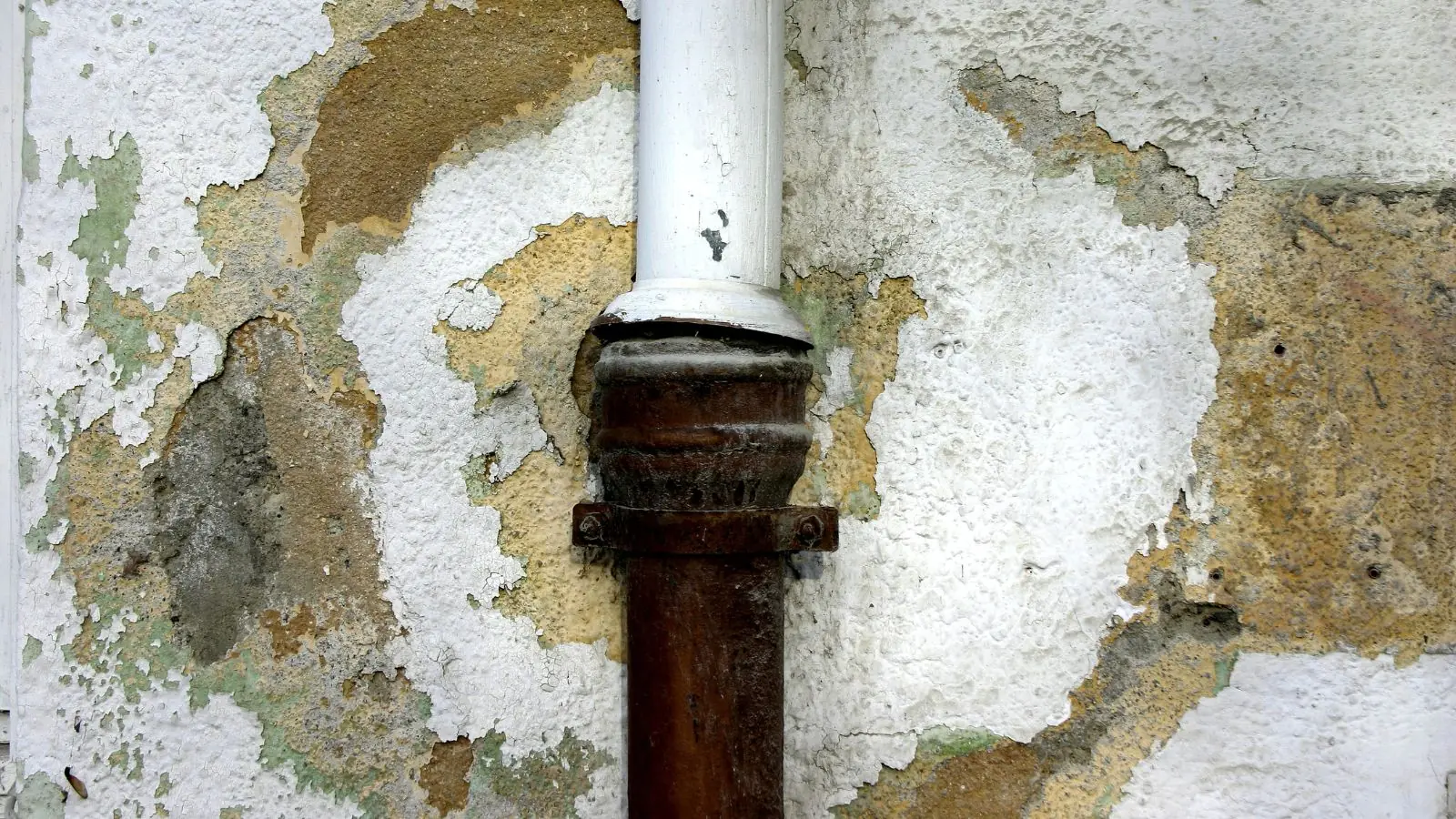
Most people picture water damage as a puddle or a brown ceiling stain. A lot of it is quieter than that. Water from a pinhole supply leak, a loose drain fitting or a window that sheds rain into the framing can soak a wall cavity for weeks before anything shows on the surface.
By the time the paint bubbles, the insulation, the bottom plate and the back of the drywall have often been wet for a long time.
This guide explains the signs that point to water behind a wall, how a technician confirms it without tearing the room apart, and what drying a closed wall involves. It also covers what you can safely do yourself in the first hour.
Why Water Behind a Wall Is Easy to Miss
Drywall is a paper-faced gypsum board, and the paper wicks moisture sideways and upward. A leak at one spot can wet a strip of wall several feet wide, and the surface may feel only slightly cool. Interior paint is also a decent vapor barrier, so a wall can stay wet inside while the face stays dry to the touch.
Insulation makes it worse. Batt insulation holds water like a sponge and dries slowly, and a wet wall cavity with little air movement can stay damp for weeks. That is the setting where mold gets started, and the EPA advises drying water-damaged areas and items within 24 to 48 hours to prevent mold growth.
Signs of Water Behind a Wall
- Paint that blisters, bubbles or peels in a patch, often near the floor or below a window.
- A stain that appears, dries and returns after the next rain or the next shower.
- Drywall that feels soft when pressed, or a hairline crack that follows a seam.
- Baseboards that swell or pull away from the wall.
- A musty smell in one room that does not clear with cleaning or airing out.
- Wallpaper that lifts at the seams or wall texture that looks wavy in side light.
- A water bill that climbs with no change in how you use water.
No single sign proves a leak. Several of them together, especially a smell plus a stain that keeps coming back, are a strong reason to have the wall checked.
Common Sources Inside a Wall Cavity
| Where you notice it | Likely source | Why it hides |
|---|---|---|
| Wall near a bathroom or kitchen | Supply line or drain connection | Small slow drips run down the framing |
| Below a window | Failed flashing or sill seal | Rain tracks inside the frame, not across the face |
| Exterior wall at the floor line | Grading, gutter overflow or a crack at the footing | Water wicks up through the bottom plate |
| Wall beside a water heater or washer | Fitting or hose leak | Moisture sits behind the appliance |
| Wall under a second-floor bath | Tub, shower pan or trap leak | Water travels along joists and drops inside the wall |
The source decides the repair. Drying a wall without fixing the source only buys time.
How a Wall Is Checked Without Tearing It Open
Technicians start with a moisture meter, which reads wetness through the surface. A pin meter checks at a point. A pinless meter scans a broader area. Readings are taken in a grid and compared to a dry wall in the same house, which gives a reference for that building's normal. This is called moisture mapping, and the results are recorded so the drying can be tracked day to day.
A thermal imaging camera helps find cool, wet areas behind the face. It shows where to look. It does not give the final answer, and a meter or a small inspection hole confirms what the camera suggests. Where a reading is high, a small opening at the base of the wall lets the crew see the insulation and the bottom plate directly.
Think a wall may be wet? Call the 24/7 line and describe the stain, the smell and where the nearest pipes run.
☎ Call (301) 936-0619What Drying a Wall Involves
Stop the source
A leaking pipe is shut off at the nearest valve, or a plumber repairs it. A drying plan cannot work while water is still entering.
Open the wall
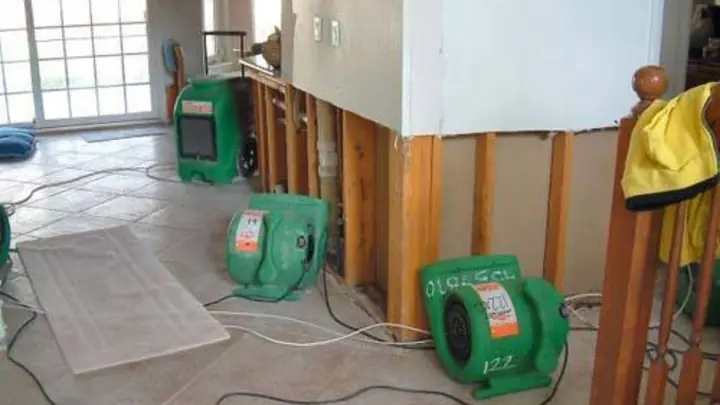
Baseboard comes off and small holes or a cut-out are made so air can reach the cavity. Wet insulation is removed and bagged, since it will not dry in place.
Dry with airflow
Air movers push dry air across the wet surfaces and low-grain dehumidifiers pull water vapor out of the room. Equipment runs until the readings match the dry reference.
Confirm and close
Final readings are recorded before drywall goes back. Closing a wall early traps moisture and invites mold.
Drying usually takes several days, depending on the materials, how long they were wet and how much the room can hold. The exact length is set by the readings, not by a calendar.
What You Can Do in the First Hour
- Shut off the water at the main valve if you cannot find the leak.
- Turn off power to the affected room at the breaker if water is near outlets, and do not touch wet electrical equipment.
- Move furniture and valuables away from the wall.
- Take photos and a short video of the stain, the smell source and any wet floor.
- Run a fan or a dehumidifier in the room, and open a window if the weather allows.
Do not drill into a bulging wall or ceiling to let water out. If water is behind it, the opening can bring it down at once and may sit close to wiring. Call for help first.
A Local Note From Hyattsville's Older Housing
The Hyattsville Historic District, listed on the National Register of Historic Places in 1982 and extended in 2004, holds late-1880s Victorian houses next to Sears bungalows and Arts and Crafts homes built between the late 1910s and early 1940s.
Older framing, plaster and added bathrooms can leave water running along paths that newer houses do not have. If you live in a house of that age, a wall stain deserves a careful look instead of a quick coat of paint.
When Walls Need Professional Help
If the wet area is larger than a hand span, if there is a smell, or if you cannot find the source, bring in a team that can map the moisture and document it.
Photos, readings and notes also matter if you file an insurance claim, and your policy decides what is covered, so check it and ask your agent. Our water mitigation service covers moisture mapping, extraction and structural drying, and homes in Hyattsville and Greenbelt are served by the same line.
After the wall is dry, repair means new drywall, taping, priming and paint. Getting the order right matters more than speed, since a patched wall that is still damp will fail again.
Keeping a Record While You Wait
A short log helps whoever looks at the wall next. Write down when you first noticed the stain or smell, whether it changes after rain or after someone showers, and which taps or appliances are nearby. Photograph the wall from the same spot every day, with a ruler or a coin for scale. These small notes often point to the source faster than any instrument, and they support an insurance claim if you make one.
Water in a wall right now? Call and we will tell you what to do while a crew is arranged.
☎ Call (301) 936-0619Where Moisture Mapping Comes From
Moisture mapping and structural drying are described in the ANSI/IICRC S500 standard. The EPA recommends drying wet materials within 24 to 48 hours to prevent mold.
Questions About Water Behind Walls
It varies with temperature, materials and airflow. The EPA advises drying water-damaged areas and items within 24 to 48 hours to prevent mold growth, so a wall that has been wet for longer than that should be checked.
Painting hides the stain and does nothing for the moisture inside. Find the source and confirm the wall is dry first, then repair and paint.
Not always. A moisture map shows how far the water went. Often small openings and airflow are enough, and only wet insulation and soft drywall are removed.
A drying log shows readings falling over several days. If readings rise again after drying, there is likely still a source, and a plumber should look at it.
Plaster, lath and older framing hold water in different ways than drywall, so readings are taken with the material in mind and the plan is adjusted. A technician explains the plan before work begins.