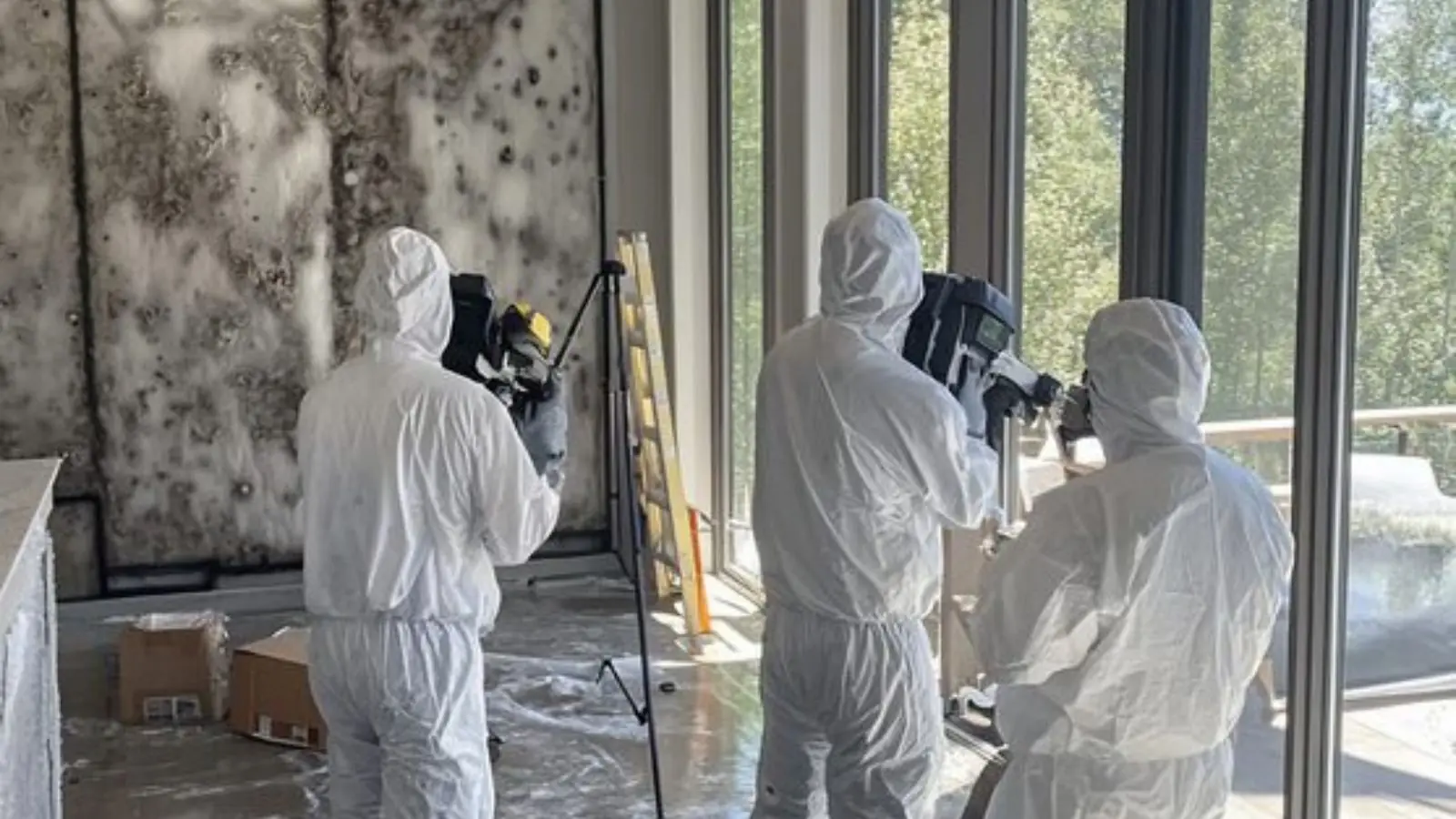
Mold in a business is not just a cleaning problem. It raises questions about who is responsible, how long the space can stay closed, which tenants are affected and what records you will need. A restaurant, a retail shop, an office and an apartment building all have different answers. This guide covers what changes in commercial work and how to prepare, so that you can make decisions quickly when growth is found.
The core science does not change. Mold grows where moisture stays, and removal means fixing the moisture, then removing or cleaning the affected materials. What changes is the scale, the schedule and the paperwork.
How Commercial Jobs Differ From Home Jobs
| Factor | Typical home job | Typical commercial job |
|---|---|---|
| Scale | One or two rooms | Many rooms, floors or units |
| Occupancy | Family can often stay elsewhere | Tenants, staff and customers affected |
| Schedule | Set by the homeowner | Often after hours to limit downtime |
| Decision maker | Homeowner | Owner, manager, tenant or all of them |
| Records | Photos for the insurer | Photos, logs and reports for owner, tenant and insurer |
| Systems | Small HVAC | Large HVAC that can spread dust between spaces |
A summary of differences. Each building is assessed on its own.
The HVAC system deserves special attention. In a commercial building, ducts can carry air between spaces, so containment and air control are planned with the system in mind. Sometimes zones are isolated or the system is shut off during work.
Who Is Responsible, the Owner or the Tenant?
This is often the first question, and the answer sits in the lease. In many leases the owner is responsible for the building envelope, the roof and the shared plumbing, while the tenant is responsible for the interior and for reporting problems promptly. Moisture that started from a roof leak is usually treated differently than moisture from a tenant's own equipment.
We do not decide who is responsible, and we do not give legal advice. Read the lease, document the condition, notify the other party in writing and involve your insurer early. Photos and a clear timeline help everyone.
The Commercial Process, Step by Step
- Assessment. A technician walks the space, takes moisture readings and maps where the water is and where growth is visible.
- Source correction. The leak, condensation or humidity problem is repaired or controlled first.
- Planning. The scope covers containment, work hours, access routes, waste handling and how the HVAC will be treated.
- Containment. Plastic barriers and negative air machines with HEPA filters keep the work area separate from the rest of the building.
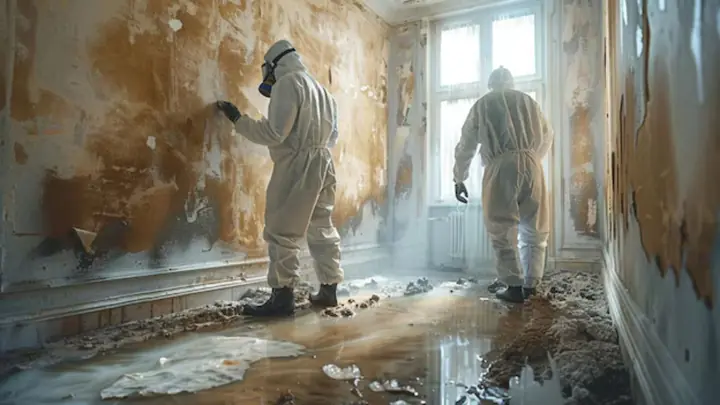
- Removal and cleaning. Affected porous materials are removed, and remaining surfaces are cleaned and HEPA vacuumed.
- Drying and checking. Equipment runs until readings return to a normal level, and the area is documented.
- Rebuild. Drywall, ceilings, flooring and finishes are replaced once everything is dry.
ANSI/IICRC S520 is the published industry standard for mold remediation. It is fair to ask any contractor whether its work follows it. Our mold remediation page describes the stages in more detail.
Found mold in a business space? Call the 24/7 line and describe the layout.
☎ Call (301) 936-0619Keeping the Business Running
Downtime is expensive, so planning matters. Work can often be staged by area, with one section sealed off while another stays open. After-hours work reduces disruption but requires access arrangements. Customer-facing businesses may need signs and a plan for deliveries, and food service sites need to coordinate with whatever health rules apply to them.
Ask for a written schedule that shows which areas are affected, on which days and what the crew needs from you, such as moved inventory or cleared walkways. Ask who will be on site and how to reach them. Surprises are what drive downtime longer than it needs to be.
Older Commercial Buildings Along Route 1
The Route 1 corridor in Hyattsville has older commercial buildings being reused for breweries and distilleries, and College Park's Baltimore Avenue corridor has shared commercial buildings of its own. Reused buildings often have older roofs, mixed plumbing and shared walls, all of which affect where water travels and who is affected.
For local details see Hyattsville and Beltsville. Our own address is 7236-7370 Baltimore Ave, College Park.
Water Events That Lead to Commercial Mold
Most commercial mold begins with a water event that was not dried in time. The EPA advises drying water-damaged areas and items within 24 to 48 hours to prevent mold growth. Burst pipes over a weekend, a roof leak above a drop ceiling and a flooded storage room are typical.
If you see water, call before the stain appears. Water that starts the job often goes to flood damage restoration or water mitigation first, with mold work following if growth has formed.
Preventive habits help. Check ceiling tiles after storms, keep humidity in storage rooms under control and fix small leaks quickly. A walk-through checklist after heavy rain catches problems while they are still small.
Planning With Tenants and Staff
Tell people early and plainly. Staff and tenants should know which rooms are closed, for how long and who to call with questions. A short written notice posted at entrances works better than word of mouth. Keep the message factual, describe the work as moisture control and cleanup and leave health questions to a physician. Clear notice also protects you if a tenant later disputes what was done and when.
Inventory and equipment need a plan too. Move or cover shelving, computers and records before containment goes up, and ask the crew what must be cleared. Items stored against a wet wall are often the first to be affected, so check the backs of shelves and the bottoms of boxes. Porous items that touched growth, such as cardboard and paper files, are usually replaced, so photograph and list them before they leave the building.
Documentation to Collect
- Dated photos of the affected areas, before and during work.
- The date water was first noticed and who reported it.
- Copies of correspondence with the owner, tenant or property manager.
- A written scope of work with the work area, schedule and any exclusions.
- Moisture readings and any independent assessment, if one is used.
Check your policy and ask your insurer what applies. Commercial policies vary widely on mold and water coverage, so ask what is required for a claim before work starts. We document the loss with photos and readings. Your insurer decides coverage.
Need a scope for a commercial space? Call the line and ask for a walkthrough.
☎ Call (301) 936-0619What to Do Before a Contractor Arrives
Do not disturb the affected area, since scrubbing or sweeping can spread growth. Close off the room, stop the moisture source and note which spaces are involved. Do not run fans pointed at visible mold.
Commercial Mold Questions
The method is the same, but the scale, schedule and records differ. Commercial jobs involve more rooms, tenants, HVAC systems and decision makers, and are often scheduled after hours.
That depends on the lease and on what caused the moisture. Read the lease, notify the owner or tenant in writing and talk to your insurer. We do not decide responsibility.
Sometimes. Work can be staged by area, with containment separating the work zone. A technician can tell you what is realistic after seeing the space.
Some owners and tenants use one for a neutral record before and after. It depends on your lease, your insurer and your preferences. We do not tell you it is required.
Yes, the 24/7 line covers Hyattsville. Older commercial buildings often have mixed plumbing and shared walls, so a technician maps the moisture before setting the scope.