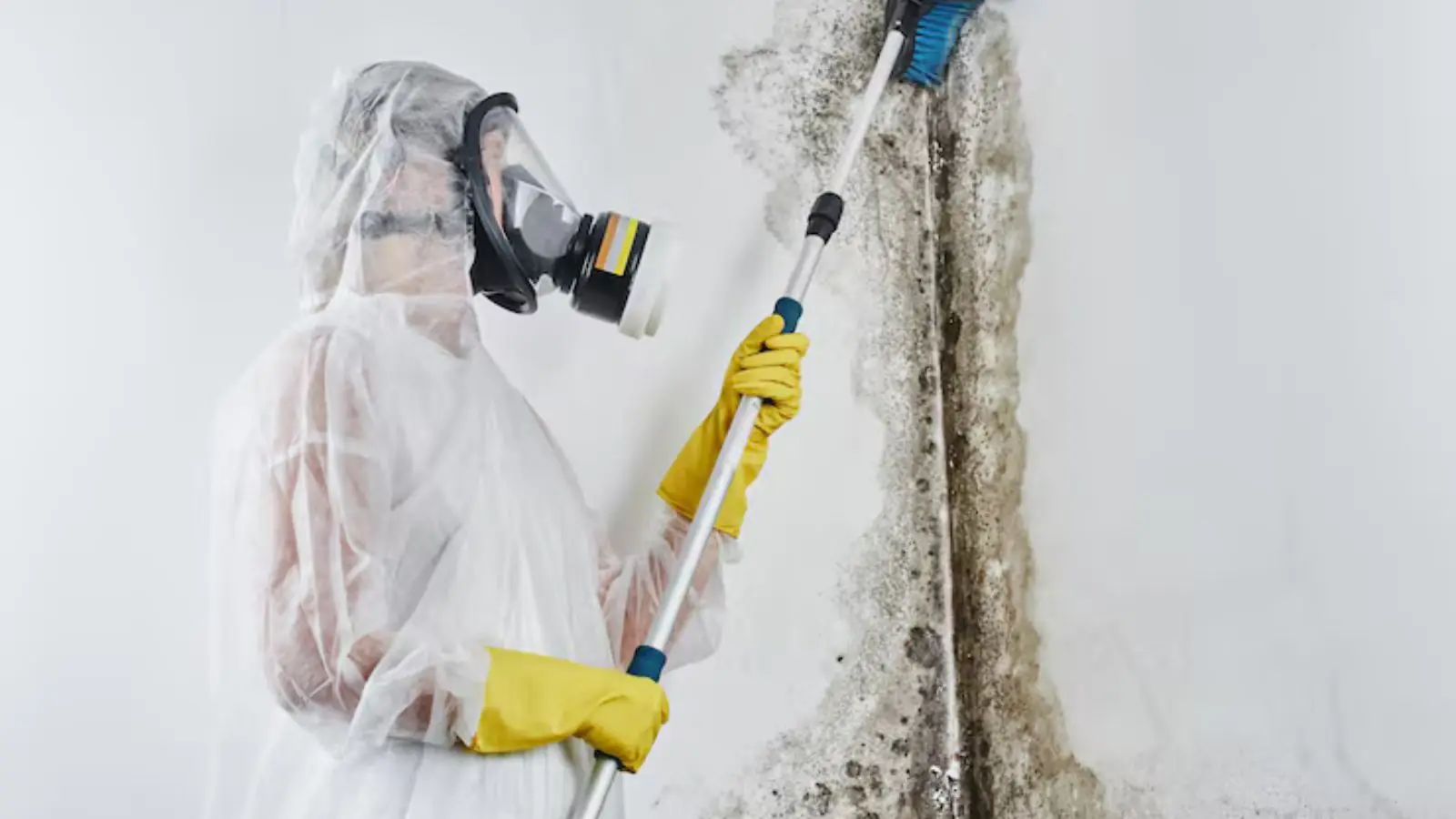
People search for black mold removal when they find dark spots on a wall, ceiling or basement corner and want to know what comes next. The color alone does not tell you what kind of mold you have, and a lab is the only way to name a species.
What matters for removal is the same in every case. Mold grows where moisture stays, and it is removed by fixing the moisture and then taking out or cleaning the affected material.
This article describes the process in plain language, so you know what to expect and can judge a scope of work when someone explains it. It makes no claims about illness, and it does not replace testing or advice from an appropriate professional. It is about the work.
Step One: Find and Fix the Moisture
Every mold job begins with the water. The EPA advises drying water-damaged areas and items within 24 to 48 hours to prevent mold growth, and says the key to controlling indoor mold is controlling moisture. If a pipe still leaks, a roof still lets water in or a basement wall still weeps, removing mold only gives you a clean surface until the next wet spell.
Technicians look at the building for the source. That can be a plumbing leak, a poorly vented bathroom, a gutter spilling against a wall or a cold surface where warm air condenses. Humidity readings help. The EPA suggests keeping indoor humidity below 60 percent, ideally between 30 and 50 percent. Moisture meters show how wet the materials are, and the source is corrected before cleaning starts.
Step Two: Decide What Can Be Cleaned and What Must Go
Materials fall into three groups. Hard, nonporous surfaces such as metal, glass and sealed tile can be cleaned. Semi-porous materials such as framing lumber can often be cleaned and dried. Porous materials such as drywall, insulation, ceiling tile and carpet padding are usually removed when mold has grown into them, because the growth lives below the surface.
- Surface-only growth on hard material is cleaned and dried.
- Framing with light growth is cleaned, often by sanding or wire brushing, and dried.
- Drywall with growth through the paper face is cut out and bagged.
- Insulation with growth is removed.
- Carpet and pad with growth are usually replaced.
The rule of thumb is that you cannot clean what you cannot reach. A porous material with mold inside is replaced, not wiped.
Step Three: Containment and Air Control
Disturbing mold sends spores into the air, which can spread them to clean rooms. To prevent that, crews set up containment. Plastic sheeting seals off the work area, a zip door lets workers enter and leave and a negative air machine with a HEPA filter pulls air out of the space through the filter. Because air flows into the contained area, dust and spores stay inside.
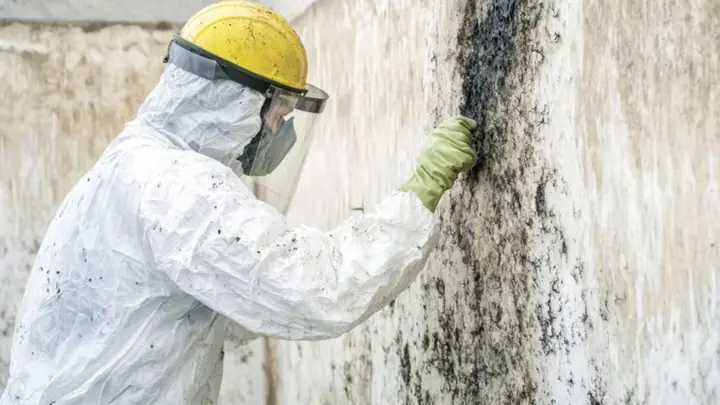
Larger or more involved jobs follow published practice. ANSI/IICRC S520 is the industry standard for mold remediation, and it is fair to ask any company whether its work follows it. We name it as a reference, and your scope of work should explain how containment will be handled.
Step Four: Removal, Cleaning and HEPA Vacuuming
Wet wipes and HEPA vacuums are used rather than dry sweeping or compressed air, which would throw dust around. Material is cut out in manageable pieces, sealed in bags and carried out in a way that avoids dragging it through the home. Surfaces that remain are cleaned and vacuumed with a HEPA vacuum, then wiped. Some crews apply an antimicrobial treatment on cleaned surfaces, though the cleaning itself is the key step.
The area is then dried. Air movers and dehumidifiers run until readings show the framing and remaining materials have returned to a normal level. After that, the space is ready for rebuilding, which is handled separately and described on our mold remediation page.
Dark spots on a wall or ceiling? Describe them to a technician on the 24/7 line.
☎ Call (301) 936-0619What About Testing?
Testing is a separate question from removal. Some people hire an independent assessor to sample before and after, so there is a neutral record of results. That can be useful when there is a dispute or a sale involved.
We do not diagnose illness or make health claims, and we do not tell you whether testing is needed in your case. It can be worth asking your insurer, a property manager or a lender what they expect.
Be wary of anyone who promises that mold will never return. A fair scope says the source was fixed, the affected material was removed or cleaned and the area was dried and checked.
Heavy Summer Storms and Basements
The City of Greenbelt's Community Flood Resiliency Plan, dated April 2026, says intense, short-duration summer storms overwhelm the local drainage system and cause localized flooding in low-lying areas. Basements and lower levels that take on water this way can start growing mold if they stay damp.
If a storm leaves a basement wet, start drying it quickly. See Greenbelt and Beltsville for the towns we serve nearby.
After Removal: Cleaning Up and Preventing a Repeat
Once the area is dry and clean, rebuilding can start. New drywall, insulation and paint go in only after the framing is confirmed dry. Surfaces such as bathroom ceilings may need better ventilation, and a basement may need a dehumidifier or drainage correction. Those fixes are what keep the problem from coming back, and they are often skipped because they are less visible than the cleaning.
If the mold followed a flood or a leak, water cleanup comes first. Our water damage cleanup page explains how wet materials are removed and the space is sanitized before mold work begins.
What You Can Do Before Help Arrives
- Keep the area closed off and avoid disturbing the growth by scrubbing or sanding.
- Run a dehumidifier if you have one, and keep it away from the affected wall.
- Photograph the area and write down when you first noticed it.
- Turn off the HVAC system if it passes through the affected room, so air does not carry dust around.
- Do not bleach or paint over the growth. It hides the problem without solving it.
Check your policy and ask your insurer what applies. Many policies treat mold differently depending on the cause, so ask early. We document the loss with photos and readings.
Ready to talk through the scope? Call the 24/7 line.
☎ Call (301) 936-0619Mold Removal Questions
No. Color alone does not identify a species, and only lab testing can name one. Removal works the same way regardless: fix the moisture, then remove or clean the affected material.
Small surface spots on hard materials can often be cleaned by a homeowner. Growth inside drywall, insulation or framing, or any large area, is usually handled by professionals with containment.
Bleach does not reach growth inside porous material, and it adds moisture. Porous materials with growth are normally removed rather than wiped.
It depends on the size of the area, the materials and the drying time. A scope of work explains the steps, and a technician sets a schedule after seeing the space.
Start drying immediately. The EPA advises drying water-damaged areas within 24 to 48 hours to prevent mold growth. Remove standing water, run fans and a dehumidifier and call the line for extraction and moisture readings.